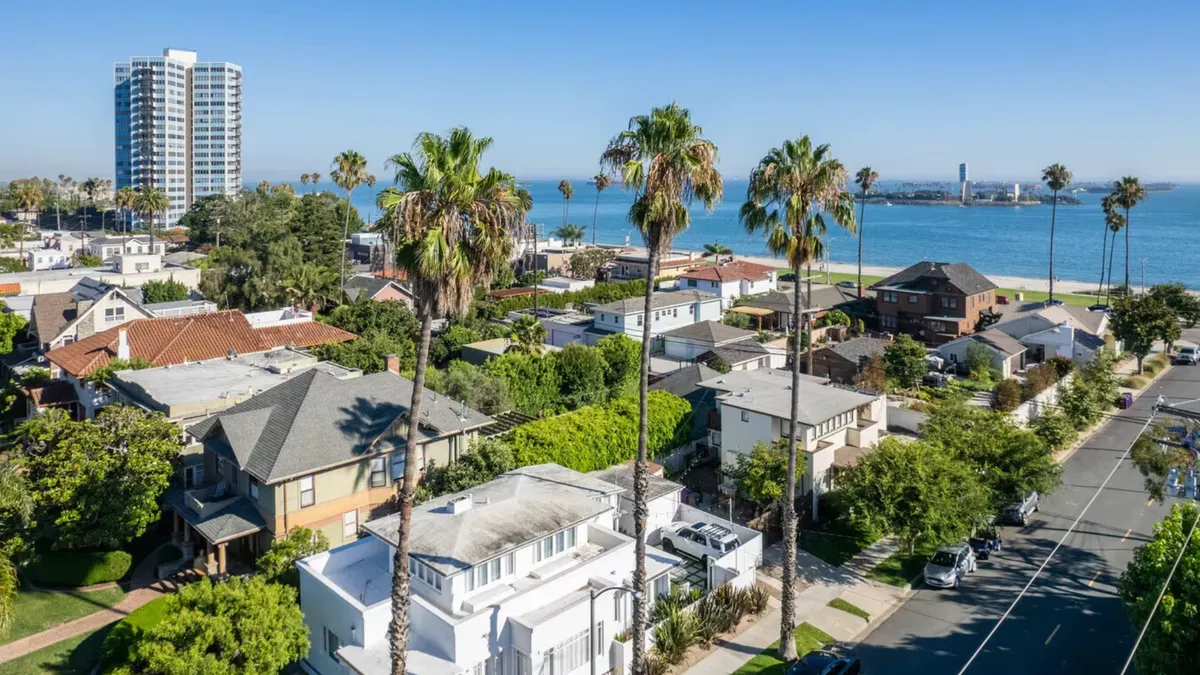
What Do California's Prop 1, Prop 37, and Prop 45 Mean for Housing and Real Estate?
California’s November 3, 2026 ballot has 14 statewide propositions, and three of them directly affect housing: Proposition 1 (funding), Proposition 37 (financing), and Proposition 45 (development approvals). This post explains what each measure would do and who it could affect. It is not a voting recommendation.
At-a-glance: Prop 1 vs. Prop 37 vs. Prop 45
Prop 1 | Prop 37 | Prop 45 | |
|---|---|---|---|
Topic | Funding | Financing | Development approvals |
What it does | Authorizes $11.25B in state bonds for housing programs | Authorizes up to $25B in bonds for second mortgages on new homes | Sets deadlines and new procedures for environmental review of "essential" projects, including housing |
Who it mainly affects | Renters, low- and moderate-income buyers, veterans, affordable developers | Middle-income buyers of newly built homes | Developers, cities, project opponents |
Who repays | State General Fund ($10B portion); veterans' loan payments ($1.25B portion) | Homebuyers' loan payments | Not a bond measure |
Cost to the state | $500M–$600M per year for about 25 years | No direct state or local cost | Likely tens of millions of dollars per year at first, possibly over $100M |
What is Proposition 1?
Proposition 1, the Veterans and Affordable Housing Bond Act of 2026, would let California sell $11.25 billion in general obligation bonds for housing. That is a $10 billion bond repaid by the state General Fund plus a $1.25 billion bond for veterans' home loans, repaid by veterans' mortgage payments.
The Legislative Analyst's Office (LAO) breaks the money down as follows:
$7.2 billion for affordable multifamily rental housing, including some supportive housing
$1.1 billion for homeownership programs for low- and moderate-income households
$1.25 billion for the CalVet Home Loan program for veterans
$500 million for infrastructure supporting affordable housing
$450 million for farmworker housing
$350 million for University of California and California State University student housing
$200 million each for tribal housing and local pilot programs
Is Prop 1 money handed directly to homebuyers?
No. The funds flow through state housing programs, each with its own eligibility rules. The LAO says some homebuyer help would come as first-time buyer loans that generally don't need repayment until the home is sold or paid off. It estimates the bond could help up to 40,000 households, including about 2,100 veterans, and subsidize up to 40,000 multifamily rental units.
What does Prop 1 cost the state?
The LAO estimates the General Fund would pay $500 million to $600 million a year for about 25 years on the $10 billion portion. The veterans' portion has no direct state cost because participating veterans' loan payments repay it.
Why does Prop 1 matter to real estate?
Buyers: More money for down-payment and homebuying assistance programs.
Investors and developers: Public funding often helps pay for building and preserving multifamily housing. In exchange, affordable rental projects generally reserve units for low-income households for 55 years.
What is Proposition 37?
Proposition 37 would create a loan program for middle-income buyers of newly built homes. It authorizes $25 billion in bonds so the California Housing Finance Agency (CalHFA) can offer fixed-rate loans covering up to 17% of the purchase price.
Who qualifies for Prop 37?
According to the Attorney General's summary, a buyer must:
Have lived in California for at least one year
Plan to occupy the home as a primary residence
Earn less than 200% of area median income
Put at least 3% down
Buy a "qualified new home": new construction, or the first sale of a converted nonresidential property
Stay under the price cap, which runs from about $1 million to $1.5 million depending on county
Income limits (200% of area median income, 2026)
Household size | LA County | Orange County |
|---|---|---|
1 person | $151,300 | $194,000 |
2 people | $173,000 | $221,800 |
3 people | $194,600 | $249,500 |
4 people | $216,200 | $277,200 |
Source: California Department of Housing and Community Development, 2026 State Income Limits.
Is Prop 37 a 17% down-payment grant?
No. It is a loan. The buyer's 3% down payment plus a CalHFA second mortgage of up to 17% brings the total to 20%. A 20% total down payment can let a buyer avoid private mortgage insurance (PMI) on the primary loan, but confirm this with your lender.
Who pays for Prop 37?
Bondholders are repaid from homebuyers' loan payments, not the state, so the LAO finds no direct state or local cost. CalHFA, not the measure itself, would decide how much of the $25 billion to issue and over what time period.
Does Prop 37 apply to existing homes?
No. The program covers newly built homes only. If you're shopping for an existing Long Beach home, condo, or duplex, you would not qualify for this loan, even if you meet the income and residency rules.
What are the arguments on each side?
Supporters, including the California State Treasurer and several labor groups, say it expands homeownership at no taxpayer cost. The state voter guide lists no submitted opposition. Critics quoted by CalMatters argue it moves money around without fixing why California housing costs so much.
What is Proposition 45?
Proposition 45 would change how the California Environmental Quality Act (CEQA) applies to projects the measure defines as "essential." CEQA requires agencies to study a project's environmental impacts before approving it. Prop 45 would tighten the deadlines and change the review and lawsuit process for eligible projects.
Which projects are eligible?
The LAO's list includes housing, water systems, clean energy, health facilities, fire and police stations, wildfire risk reduction, broadband, education facilities, and transportation. Eligible applicants can choose the new procedures or stay with the existing ones.
What would change for housing projects?
Per the LAO analysis, eligible projects would see:
A 365-business-day limit on finishing an environmental impact report (EIR) before the applicant can request a hearing or sue
Agencies required to list all application requirements up front
Only one project alternative required from the applicant
Capped public comment periods
Court challenges limited so a judge can halt only the non-compliant part of a project, not the whole project
Most eligible housing projects over 85 feet in height must pay prevailing wages.
What do supporters and opponents say?
Supporters say CEQA delays are a fundamental reason for California's housing shortage. A Holland & Knight study of CEQA lawsuits (the firm is a supporter of Prop 45) found suits filed in 2020 challenged about 48,000 approved housing units.
Opponents say it weakens environmental review and public input. The LAO estimates initial government costs in the high tens of millions of dollars per year, possibly over $100 million. It calls the longer-term fiscal effect uncertain.
Why might Prop 45 matter to investors and developers?
If projects clear review faster, timelines and carrying costs could change. The LAO says the long-term effect is uncertain and depends on how many projects get built.
FAQ
Which California propositions affect housing in 2026?
Propositions 1, 37, and 45. Prop 1 is a housing bond, Prop 37 is a new-home loan program, and Prop 45 is CEQA reform.
Would Prop 37 help me buy an existing home in Long Beach?
No. It covers newly built homes and qualifying converted nonresidential properties only.
Does Prop 1 raise my taxes?
Prop 1 is repaid from the state General Fund, not a new tax. The LAO puts the cost at $500 million to $600 million a year for about 25 years.
Does Prop 45 eliminate CEQA?
No. The LAO describes new procedures for eligible projects that applicants may choose to use. Environmental review still applies.
Scope and watch-outs
This post covers the housing-related effects of three measures as written in the official voter materials. It is general information, not legal, tax, or financial advice, and not a voting recommendation. Program details could change if a measure passes, and CalHFA and state agencies would set implementation rules. Confirm eligibility with a lender or the relevant agency.